

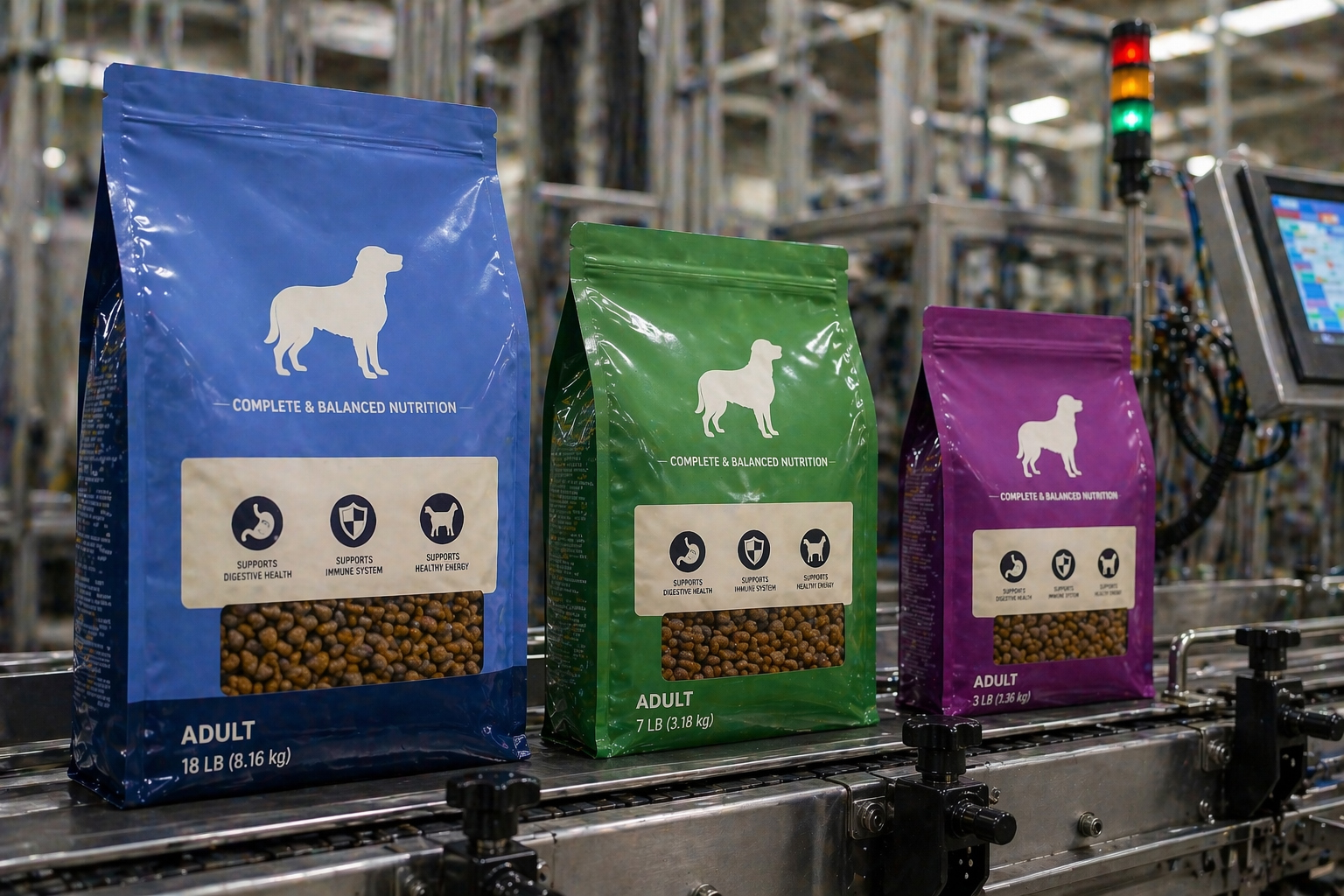
Changeovers, Cost, and Flexibility in Pet Food Production
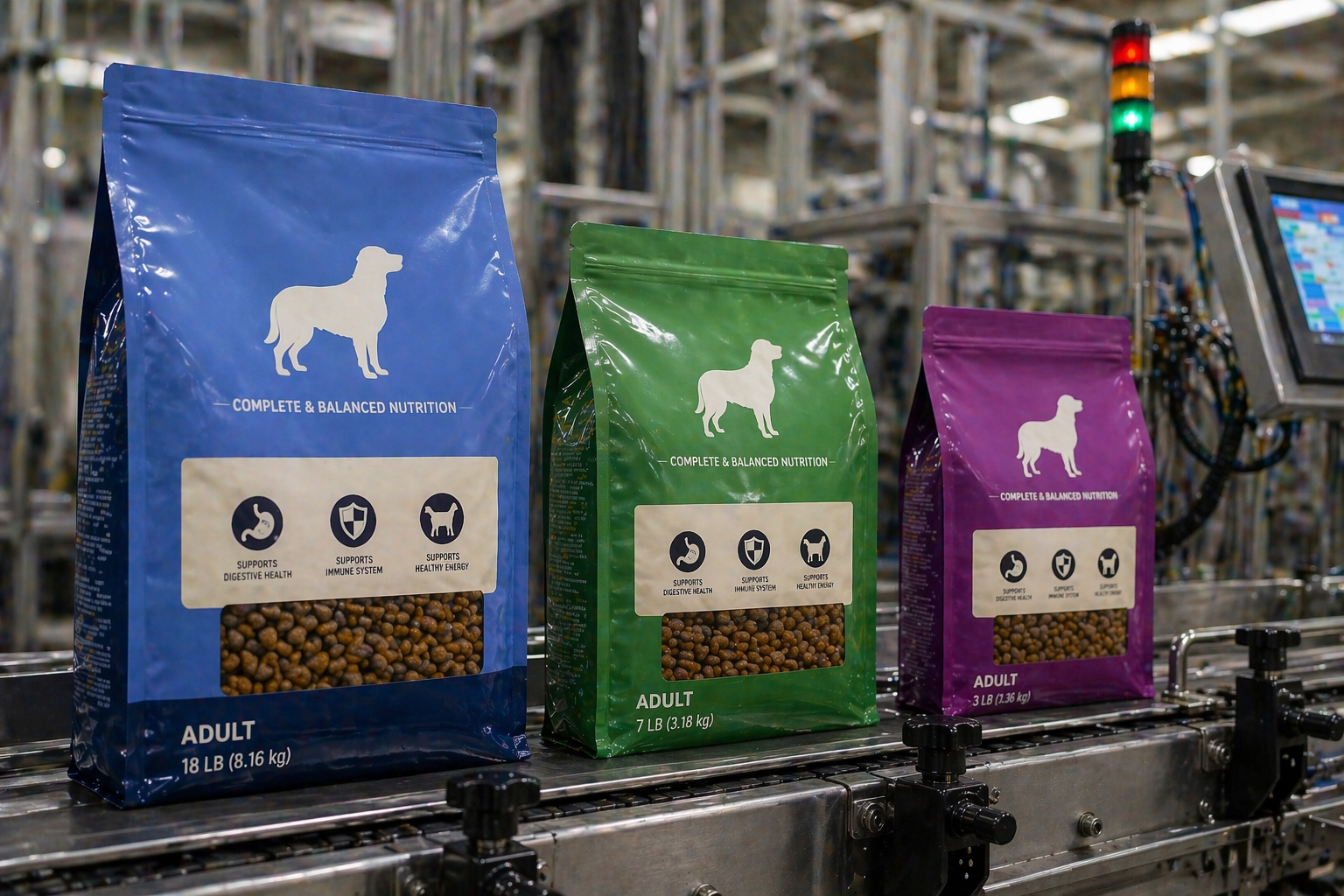
The Hidden Complexity of Multi-SKU Production
Pet food manufacturers and co-packers rarely operate with a single product configuration.
Different brands, formulations, and packaging types all require adjustments — including changes to coding.
Even when changeovers happen only a few times per week, they introduce:
- Operational delays
- Additional labor
- Increased potential for error
And often, the marking system plays a larger role in that process than expected.
Why Traditional Systems Create Friction
Many marking systems require significant effort to adjust between products.
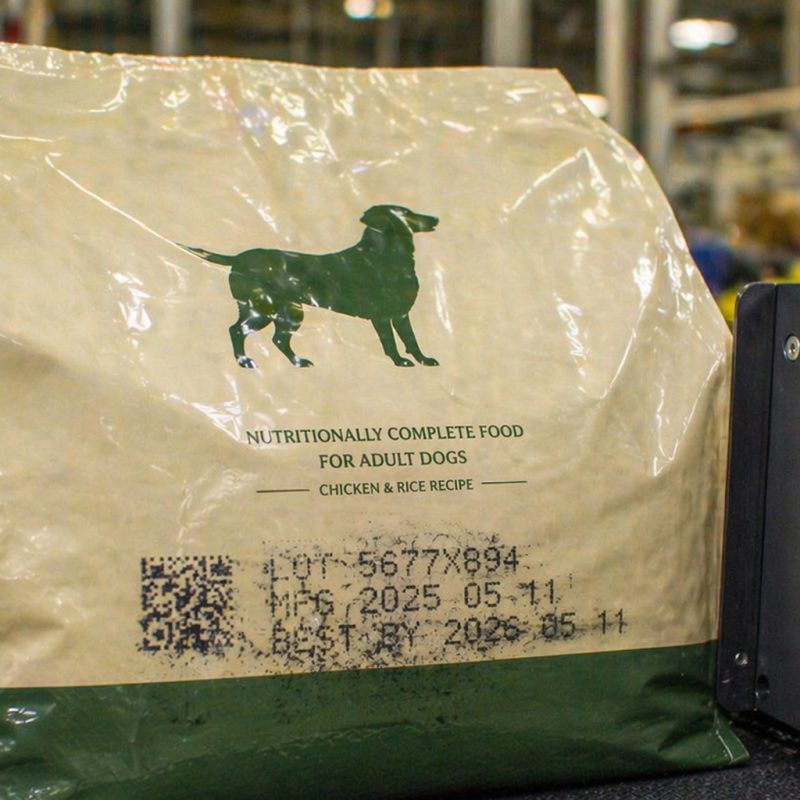
Changing ink types or colors may involve:
- Flushing the system
- Running purge cycles
- Cleaning components
These steps take time and can disrupt production schedules.
Simplifying Changeovers
Cartridge-based systems eliminate much of that complexity.
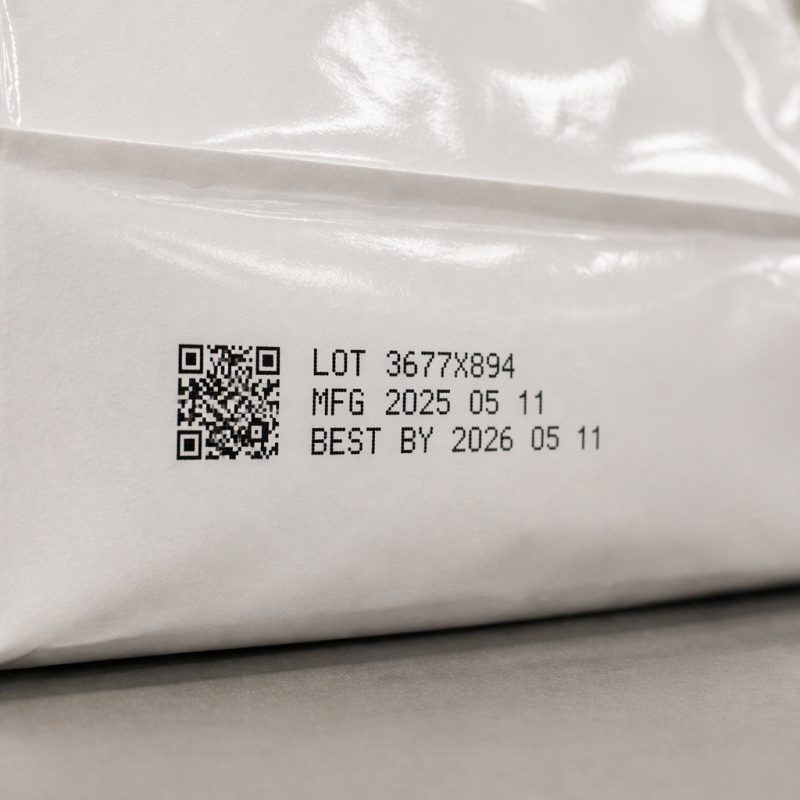
Because the cartridge contains the ink, printhead, and electronics:
- Changing ink types becomes a simple swap
- No flushing or purge cycles are required
- Downtime is minimized
This is especially valuable in co-packing environments where multiple brands share the same
equipment.
Rethinking Cost Per Imprint
Cost is often evaluated based on consumables alone. But in production environments, total cost includes more than ink.
It includes:
- Maintenance time
- Spare parts
- Operator involvement
- Downtime
When these factors are considered, systems that reduce maintenance and simplify operation
often deliver lower total cost of ownership — even if the per-unit consumable cost appears
higher.
A More Practical Evaluation
For pet food manufacturers and co-packers, the most effective systems are not always the ones with the lowest upfront or per-unit cost.
They’re the ones that:
- Keep lines running
- Reduce operational complexity
- Deliver consistent results
Because in a high-throughput environment, reliability and simplicity translate directly into efficiency.