

Labeling Challenges Facing Modern Industries
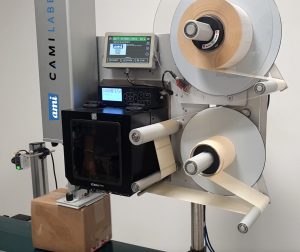 Every industry faces its own set of challenges and hurdles when it comes to labeling. Meeting regulations set forth by industry guidelines require dynamic equipment and protocols capable of adapting to the ever-evolving needs.
When maximizing efficiency and trying to manage consistency throughout the labeling, marking , and coding processes- it is imperative that the labeling equipment is equipped with cutting edge technology and capabilities. AMI is happy to offer equipment, like the CAMI Label line, with a focus on efficiency and reliability. In today’s fast-paced world, any minor setback at the labeling stage can cause a company to incur needless errors, recalls and an overall production slowdown. Our aim is always to alleviate this threat by offering the best equipment on the market along with world-class support.
Product recalls cause a potential $10 million in revenue loss every single occurrence for larger companies. This kind of setback and financial hit is a devastating burden and therefore the reason we focus on easily-implemented equipment. It is estimated that small businesses that incur a setback of this level fail within 3 years of the product recall, often unable to overcome the negative impact and financial strain.
Understanding the potential setbacks in the labeling field can help businesses avoid these costly mistakes and focus on growing and prospering. Increasing supply chain visibility and maximizing the efficacy of current equipment and standards should be the focus of any manufacturer and supplier.
We have outlined several of the areas where supply chain providers may run into potential issues below:
Changing Regulations & Standards for Labeling
The most common challenge when it comes to labeling is compliance. Depending on the industry of focus this could mean anything from product ID numbers, to expiration dates, to proper handling and storage requirements. Due to the large swath of industries that utilize marking and coding, fields require an extensive knowledge and up-to-date knowledge of industry regulations and standards. Of course, these standards can further be complicated by the requirements of a global market.
Governing bodies and regulatory agencies typically lay out the guidelines for industry compliance. It is imperative that manufacturers, suppliers and retailers are well versed on these guidelines and have a compliance specialist ensuring that all protocols are being met and followed.
Large retailers like Walmart or Amazon also have their own set of labeling guidelines that have become somewhat of an industry standard that often meets or exceeds the requirements of smaller retailers. We have outlined a number of Walmart’s labeling guidelines for a bevy of industries.
- Walmart Requirements for Case & Shipping Labeling, Coding, & Marking
- Walmart Pallet Shipping Label Requirements
As these industry guidelines change, having dynamic labeling equipment allows providers to adapt on the fly, avoiding potential violations or fines. Labeling software that can easily integrate into labeling hardware makes for easy adaptability in an ever-changing world.
Label & Barcode Issues
 Labeling and barcode issues cause problems for potential retailers and end customers. Either offering incorrect information or slowing down the sale or automation processes. The worst issue is the aforementioned recall which can be costly or entirely detrimental for a company. The most common types of labeling issues are:
Incorrect data, misplaced barcode, barcode disruptions, color issues, and poor print quality.
Cutting edge labeling solutions, like those offered by AMI, provide enhanced reliability, accuracy, and even security to prevent these potential pitfalls.
Multi Language Support
One of the additional challenges that global brands and suppliers face is creating and adapting labeling info for a variety of regions and areas around the world with their own unique set of standards and needs. This is also something that needs to be on the horizon for any company looking to grow and expand to this level, to effectively have equipment that can adapt to those potential future needs.
Proper translation is a MUST for so many industries such as medicine and food, where the health and safety of consumers is dependent on accurate translations. Failure to do so can cause a recall or deeply damage consumer trust. Auto-translation capabilities are becoming a relevant and necessary labeling solution to many international companies.
Requirement Set Forth By Customers
Oddly enough, customers can sometimes be the most demanding audience dictating the size, color and shapes of labels. The need to have the most information available for a product that is potentially being consumed or used, is of course an important driving factor to labeling. A centralized system is of the utmost importance for collecting data, implementing it and in the end presenting consumers with a digestible, easy to understand product label. In addition to alleviating any potential issues, this also bolsters consumer confidence in a specific brand.
AMI offers a variety of products and technologies that aim for the smoothest and most care-free labeling, coding and marking in the industry. Our goal is to provide our customers with the most cutting edge technology that can be easily adapted and tailored to any industry. Call 1-800-345-6667 or request a no obligation qutoe.